

Nine links between you and a verdict
When care isn't documented, it's difficult to defend. Ellie helps build a stronger, more defensible record throughout the resident's stay, before a lawsuit ever begins.
Three forces reshaping skilled nursing litigation
None of these are about quality of care. All three are about what your chart can prove.
Nuclear verdicts keep climbing
Annual U.S. verdicts over $10M climbed sharply from 2020 to 2025.
Some defense attorneys now consider SNF verdicts as low as $3M to be nuclear.
Outside Funding Fuels Litigation
Outside funding helps plaintiff firms pursue more cases and larger demands.
Greater financial backing can allow firms to reject early settlements and take cases to trial.
AI finds the gaps at scale
AI can analyze survey citations and records to identify documentation gaps.
Missing records of family education or warnings can become points of dispute.
Ellie turns the documentation you already create into evidence
Facilities generate a mountain of records every day. None of it was built to hold up in a deposition — it was built to deliver and bill for care.
Ellie watches each chain for missing or broken links and surfaces them while the resident is still in the building and the gap can still be closed.
Admissions and status changes trigger condition-specific, physician- and attorney-verified education inside a window you set. 200+ templates, e-signature, teach-back video, and one-to-all broadcast for outbreaks and emergencies.
Every message, report, and signature lands in the resident's chart, audit-ready, with no manual upload.
Nine weighted chain elements produce one defensibility score per resident, per building, and across the portfolio.
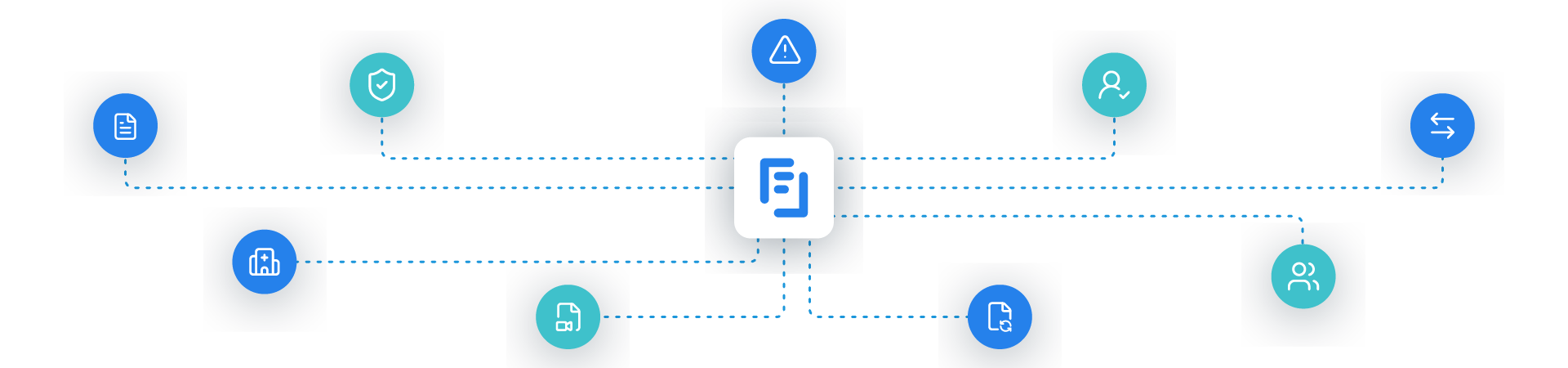
Ellie Lite delivers today's platform — Signables, Workflows, Communication Hub, Informed Consent, Broadcast — in the Ellie interface. Ellie Pro adds the full nine-element chain and defensibility scoring. Both map to the F-tags surveyors cite: F552, F580, F584, F623, F684.
The nine chain elements
Nine questions a plaintiff attorney works through once the chart is in hand. Each one is a place a defense holds or gives way.

Authority Verified
Proof the person who signed had the legal standing to sign. Responsible party, POA, or resident — confirmed, not assumed.

Capacity Captured
Evidence that the resident's decision-making capacity was assessed and recorded at the time consent was given.

Risk Specificity
Were the risks disclosed this resident's actual risks, drawn from their own chart? Generic education earns partial credit; patient-specific disclosure scores several times higher.

Comprehension
Teach-back questions and video prove the family understood, not just received. Sent, viewed, acknowledged, signed — each worth more than the last, with teach-back on top.

Witnessing
A named, attributed witness to the conversation or signature, so the record does not rest on one staff member's memory.

Currency / Re-consent
Consent and disclosure age. Ellie tracks when a condition changes or a document goes stale and prompts re-consent before it matters.

Workforce Qualification
The chain for the staff side: licensure, credentials, and training current on the date of care, not on the date of audit.

Continuous Documentation
An unbroken sequence with no silent gaps. Missing links are flagged as gaps rather than left invisible.

Transition Integrity
The handoff points — admission, status change, hospital transfer, discharge, hospice — where records most often break and claims most often start.


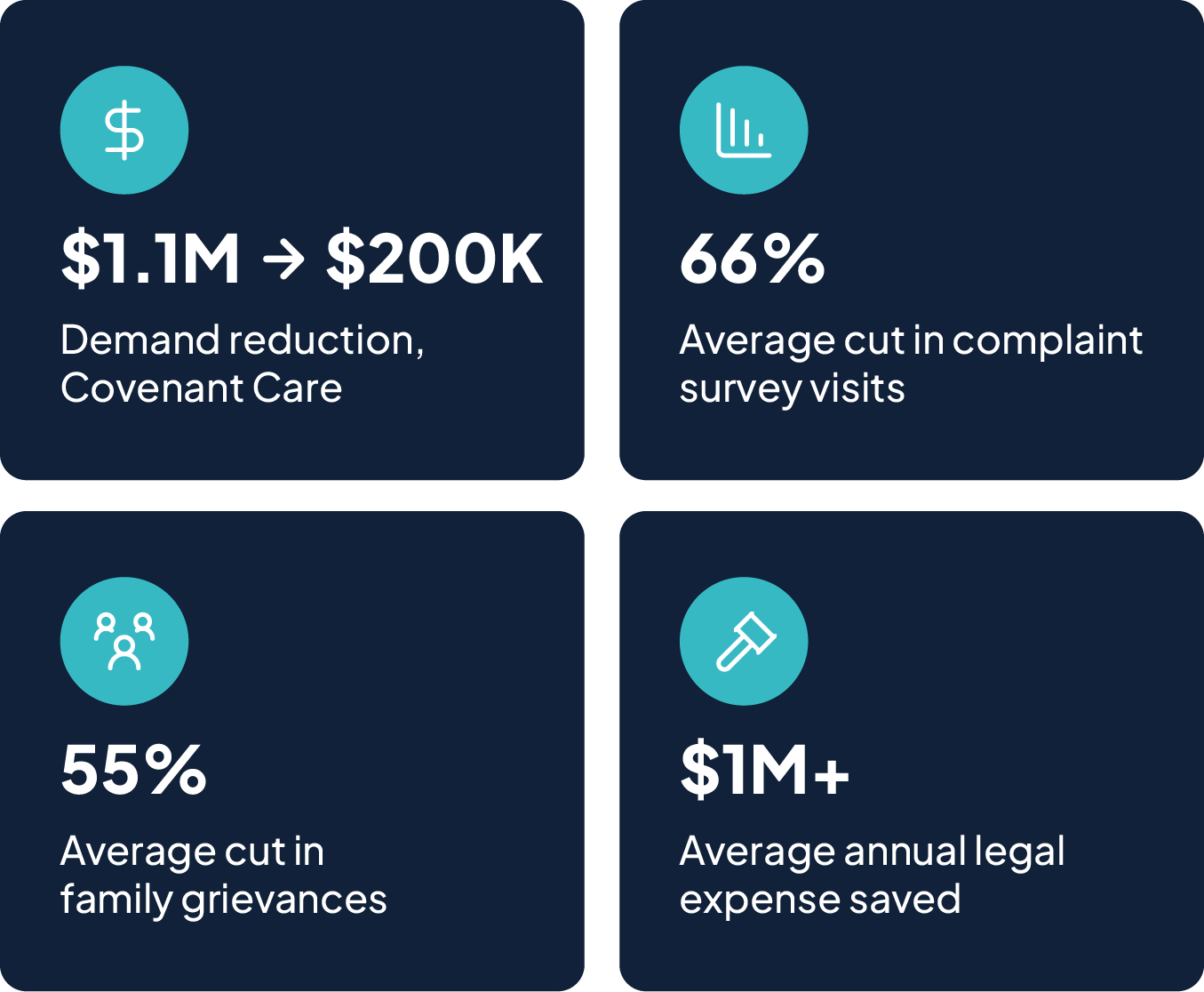
Verdict counts: CaseGlide Nuclear Verdicts Database (2025 year to date). Harm citations: KFF analysis of CMS data, 2022–2023. Outcome figures are customer averages reported on informedmedical.com. Ellie Pro scoring reflects facility-entered data.